The Role of Lore in Adventure Gaming: Why Worldbuilding Matters
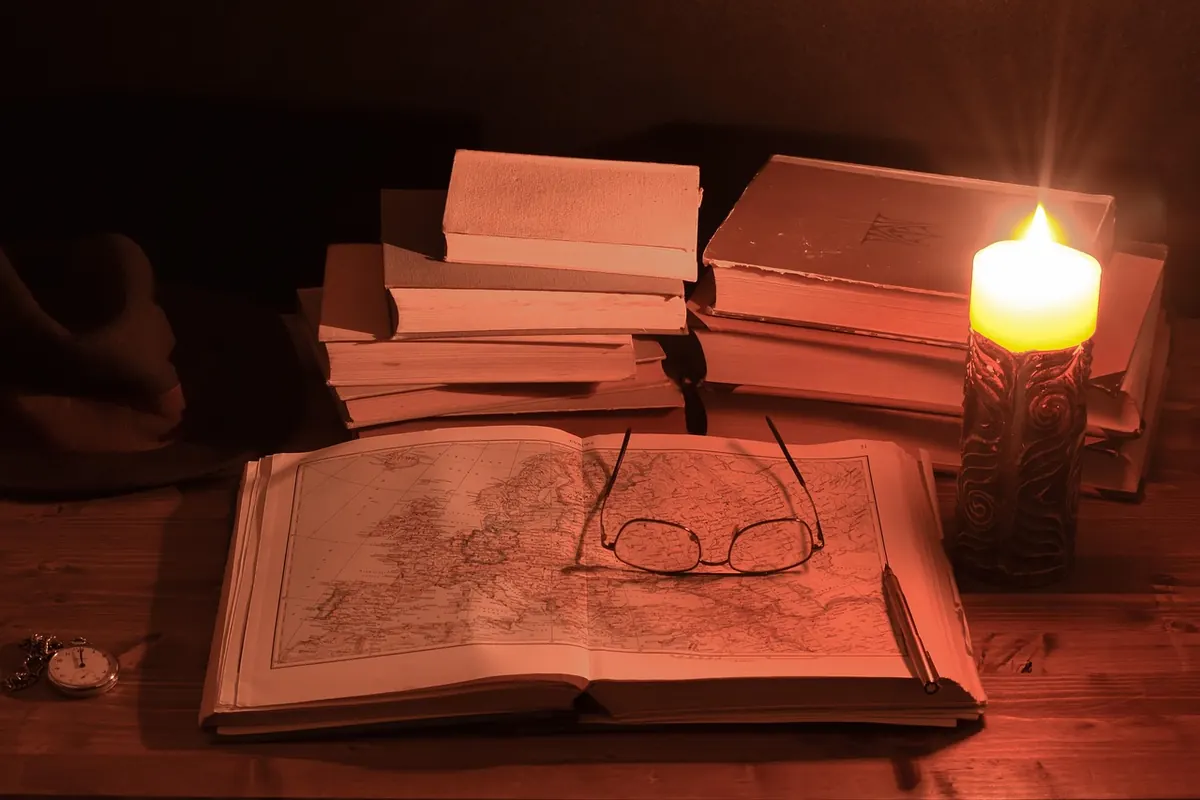
A locked door, a bowl of cold stew beside it, and a key that fits nothing in the house. No dialogue box has explained anything, yet the player already understands: someone left in a hurry, and someone else came back. That is lore doing its job quietly.
Worldbuilding in adventure games is often treated as a writing problem: build the history first, then look for somewhere to put it. It works better the other way round. When lore lives inside the level, the puzzle and the pacing, players assemble the world themselves, and they remember it longer. What follows is how to weave it into quests without burying the people playing them.
Lore Belongs in the Room, Not the Menu
The instinct when a setting has depth is to prove it: codex entries, narrated histories, a lorekeeper by the fire who will not stop talking. The trouble is that adventure players are usually mid-task. They are holding a puzzle in their head, tracking two objectives and a growing suspicion about the innkeeper. A wall of text arrives at the worst possible moment, and it gets skimmed or skipped.
None of that means writing less lore. Write the same amount and deliver it through different channels. Take each fact and ask whether a player could see it rather than read it. A family crest above a doorway can carry a paragraph about old alliances. A ration tin stamped with a foreign army's mark can carry an entire border dispute. Both take seconds to absorb, and neither stops the game.
Environmental Storytelling Does the Heavy Lifting
Environmental storytelling puts narrative in objects, layout and light rather than in speech. It is cheap to produce, easy to miss and satisfying to find, which is exactly the balance you want. Some reliable patterns:
- Position. Two chairs, one knocked over, tell you the conversation ended badly. Nothing needs to be said.
- Repair. A patched bridge says somebody still cares about this road. A collapsed one says the road is finished, and so is whoever used it.
- Contradiction. Fresh flowers on a shrine inside a burnt chapel. The clash is the information.
- Scale. A child's wooden horse on the floor of a giant's hall. Now you know something about the giant that no villager would say aloud.
- Absence. A farming village with no graves, no children's shoes, no smoke. Missing things read as loudly as present ones.
Use three touches rather than one. A single detail can pass as scenery; three details pointing the same way become a conclusion the player reaches alone, and a conclusion a player reaches alone is one they trust.
Attaching Lore to Quest Beats
The mistake is bolting lore on at the end. Build it in while the quest is still being designed, so each mechanical step carries a fragment of the world.
- Map the beats first. List what the player actually does: arrive, search, bargain, choose, leave.
- Give each beat one fact. One is a hard limit. Two turns a beat into a lecture.
- Pick a channel. Sight, sound, an item description, a line of dialogue, or the consequence of a choice. Vary them across the quest.
- Echo it later. Repeat the fact in a different form at a different distance. First a sigil carved on a door, then the same sigil on a body.
- Leave one thing out. Decide which detail you will never explain, and hold that line.
If a beat has no natural fact attached to it, let it breathe. Not every corridor needs a plaque.
Pacing: Let Players Breathe
Lore lands hardest in the quiet moments: after a fight, on the walk between two objectives, in the pause while a lever grinds home. There is a reason so many memorable adventures place a still room, a note or a view just before the boss. That rhythm is not decoration; it is how a game manages tension.
Two habits help. Keep discoverable text short, because a note of sixty or eighty words gets read and a note of three hundred gets closed. Then put the longest optional reading somewhere safe, where nothing is chasing the player and no timer is running. Curious players will find it; hurried ones will not be punished for skipping it.
Testing Whether the World Reads
You cannot playtest lore by asking people whether they liked it. Ask them what happened instead. Sit beside a first-time player, keep quiet, and note when they pause on an object, when they double back, and when they walk straight past something you thought was obvious.
Afterwards, ask three questions. What do you think happened here? Who do you trust? What are you still wondering about? If the answers match your intent, the environment is doing the work. If you have to explain the point out loud, that explanation belongs in the game rather than in the debrief.
Watch especially for the moment a player says something like, "so that's who took the shipments", without being told. That is the whole craft in one sentence.
A Short Checklist Before You Ship
- Can each key fact be seen as well as read?
- Does every quest beat carry no more than one new fact?
- Have you echoed your most important detail at least twice?
- Is there something in the world you deliberately never explain?
- Is the longest piece of optional reading somewhere calm?
- Did a fresh player draw the right conclusion unprompted?
Lore is not a wall of text bolted onto an adventure. It is the furniture, the weather and the silences between two characters who will not say what they mean. Build it into the rooms and the quest steps, keep it lean, and players will wander past your careful paragraphs and come back with a story they believe they found on their own. That is the point.
Photo: ExplorerBob / Pixabay